“You really have to try this bratwurst skillet,” my coworker insisted one lunchtime, sliding a container of leftovers across the table. Honestly, I was skeptical — bratwurst and sauerkraut felt a little old-school German diner to me, and I wasn’t sure how they’d translate into a quick skillet meal. But that tangy aroma hit me first, and I couldn’t resist a taste. One bite and I was hooked. That night, I found myself in my own kitchen, surrounded by onions sizzling in butter and bratwurst browning to a perfect crust, the tang of sauerkraut waiting to join the party.
What struck me was how the flavors balanced — the savory richness of the sausage, the sweet caramelized onions, and that zingy, slightly sour sauerkraut all coming together in one pan. It felt like comfort food but without any fuss or long prep. Since then, this savory bratwurst skillet with tangy sauerkraut and onions has become my go-to when I want something hearty but straightforward. It’s that kind of dish that warms you from the inside out, especially on a chilly evening. Plus, it’s a little nostalgic, reminding me of casual dinners with friends and unexpected moments of joy over simple food.
To me, this recipe isn’t just about the ingredients; it’s a reminder that sometimes the best meals come from honest, straightforward cooking that’s both satisfying and soul-soothing. There’s something quietly rewarding about mastering this skillet — no frills, just bold flavors and easy steps. And if you’re anything like me, you’ll find yourself reaching for this skillet recipe again and again, no matter the season.
Why You’ll Love This Recipe
This savory bratwurst skillet with tangy sauerkraut and onions stands out because it’s genuinely simple yet packed with layers of flavor. Having tested it multiple times (usually more than once a week), I’ve noticed how it consistently delivers a satisfying meal with minimal effort.
- Quick & Easy: Ready in under 30 minutes, perfect when you’re juggling a busy schedule but still want a home-cooked meal.
- Simple Ingredients: No need for specialty stores — bratwurst, onions, and sauerkraut are pantry staples or easy to find in most grocery stores.
- Perfect for Cozy Dinners: Especially good when you want something comforting without turning on the oven or firing up complicated recipes.
- Crowd-Pleaser: My family and friends always ask for seconds, even the pickier eaters appreciate the balance of savory and tangy here.
- Unbelievably Delicious: The caramelized onions and the sauerkraut’s distinct zest bring the dish to a level beyond your usual sausage skillet.
What sets this recipe apart is the attention to the sauerkraut and onion combo — instead of just tossing them in, I take time to gently caramelize the onions first, which adds a natural sweetness that perfectly counteracts the tangy sauerkraut. Also, by browning the bratwurst in the skillet, you get a wonderful crust that locks in the juices. It’s a little technique I picked up from making sausage and pepper sheet pan dinners, but adjusted here for skillet cooking.
Honestly, this recipe feels like a warm hug after a long day — satisfying, nostalgic, and just the right amount of bold. Plus, it’s flexible enough to make weeknight meals feel special without any stress.
What Ingredients You Will Need
This savory bratwurst skillet uses straightforward ingredients that pack a punch without complicated prep. Each component plays a role: bratwurst delivers rich, juicy protein; onions bring sweetness and depth; sauerkraut adds that signature tanginess that wakes up your taste buds.
- Bratwurst (4 links, about 1.5 lbs / 680 g) – Fresh or pre-cooked bratwurst work well; I prefer fresh for the juiciest results.
- Yellow onions (2 medium, thinly sliced) – Caramelized slowly to add natural sweetness.
- Sauerkraut (1 cup / 150 g, drained) – Look for unpasteurized sauerkraut if possible; it offers better texture and flavor.
- Butter (2 tablespoons) – For sautéing onions and adding richness.
- Olive oil (1 tablespoon) – Helps brown the bratwurst without burning.
- Garlic (2 cloves, minced) – Adds a subtle aromatic layer.
- Caraway seeds (1 teaspoon, optional) – Traditional with sauerkraut, brings an earthy note.
- Salt & freshly ground black pepper – To taste; seasoning is key to balancing flavors.
- Fresh parsley (2 tablespoons, chopped) – For garnish and a fresh pop of color.
When selecting bratwurst, I usually go for a brand like Johnsonville for consistent quality, but local butcher sausages bring a nice twist if you want to experiment. For sauerkraut, you’ll notice a big difference between jarred pasteurized versions and fresh refrigerated ones — the latter has a brighter tang and crunch.
Don’t have butter? You can swap it for a neutral oil, but butter really brings that mellow depth when cooking the onions. If you want to make this dish a little lighter, try turkey bratwurst or chicken sausage instead, and check out my healthy grilled chicken and quinoa power bowl for more lean protein ideas.
Equipment Needed
- Large cast iron or heavy-bottom skillet – Ideal for even heat and great browning. If you don’t have cast iron, a stainless steel or nonstick skillet works fine.
- Wooden spoon or spatula – For stirring and sautéing onions without damaging cookware.
- Sharp knife and cutting board – For slicing onions and prepping garlic.
- Measuring spoons and cups – To keep seasoning and ingredients balanced.
Personally, I swear by my cast iron skillet for this recipe; it holds heat like a champ and creates that unbeatable crust on bratwurst. If you’re new to cast iron, just make sure it’s well-seasoned and avoid using soap when cleaning it — just hot water and a brush. For those on a budget, a good-quality nonstick skillet can do the job, though you might miss some of that crispy char.
Preparation Method
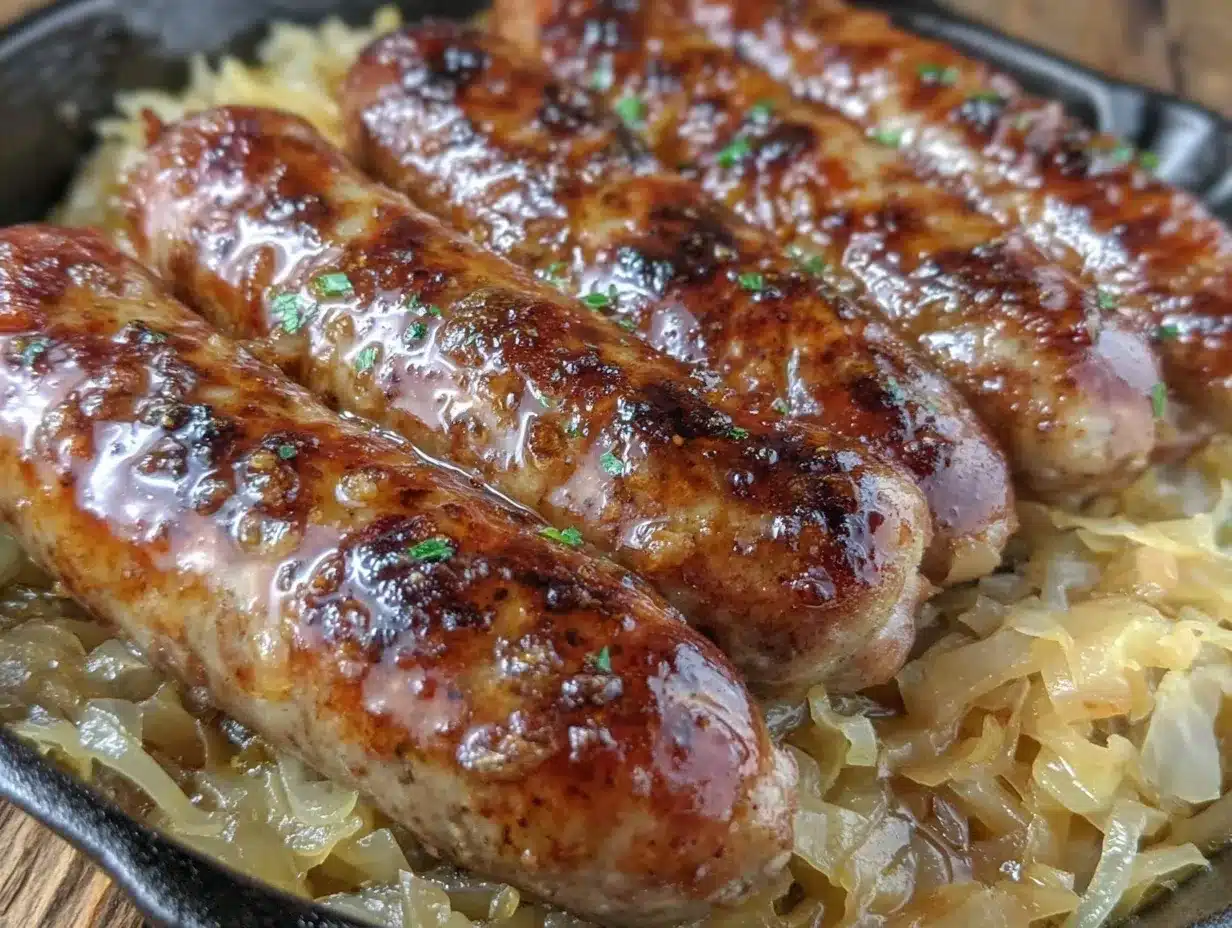
- Prep the ingredients (5 minutes): Peel and thinly slice the yellow onions, mince the garlic cloves, and drain the sauerkraut well to avoid excess liquid in the skillet.
- Caramelize the onions (15 minutes): Heat 2 tablespoons of butter over medium heat in your skillet. Add the sliced onions and a pinch of salt. Stir occasionally, cooking until the onions turn golden brown and sweet-smelling — about 12-15 minutes. Patience here pays off; rushing will leave you with sharp, raw onion flavor.
- Brown the bratwurst (8-10 minutes): Push the onions to one side of the skillet. Add 1 tablespoon olive oil to the empty space, then place the bratwurst links in the pan. Brown on all sides, turning frequently so they cook evenly and develop a nice crust. Depending on thickness, this takes about 8-10 minutes total. If using pre-cooked bratwurst, reduce time accordingly just to heat through and brown.
- Add garlic and sauerkraut (3 minutes): Stir the minced garlic into the onions and bratwurst. Then add the drained sauerkraut and sprinkle in 1 teaspoon caraway seeds (if using). Mix everything gently to combine and warm the sauerkraut through, about 2-3 minutes. The skillet should smell savory with a hint of tang now.
- Season and finish (2 minutes): Taste and season with salt and freshly ground black pepper as needed. Remove from heat and sprinkle chopped fresh parsley over the top for freshness and color.
Altogether, you’re looking at a 30-minute meal that feels like you spent hours fussing over it. The caramelized onions really transform the dish, so don’t skip that step or crank the heat too high — slow and low is the secret to sweetness. If you notice the skillet getting dry during caramelization, add a splash of water or a little extra butter.
For a little extra texture, I sometimes add sliced apples or a handful of crispy bacon pieces, which adds an unexpected twist. This method is similar to how I approach dishes like my loaded steak and potato soup, where layering flavors slowly is key.
Cooking Tips & Techniques
One of the trickiest parts of this recipe is getting the onions just right — they need to be soft and caramelized without burning. I learned the hard way that medium heat and patience are your best friends here. Stir every few minutes, scraping the bottom to prevent sticking, but don’t rush it by turning up the heat; burnt onions will ruin the balance.
When browning bratwurst, I like to let them sit undisturbed for a couple of minutes on each side before turning. This helps build a crisp, flavorful crust. Also, don’t overcrowd the skillet; if your pan is too full, the sausages steam instead of brown.
Draining the sauerkraut is another subtle step — too much liquid can make the dish soggy. I usually press it in a fine mesh strainer or give it a quick squeeze in a clean kitchen towel.
Multitasking helps: I prep the onions and bratwurst while the skillet heats so the process flows smoothly. And if you want to keep things tidy, I recommend cleaning and prepping your cutting board right after slicing the onions to avoid the lingering smell.
Finally, don’t skip the fresh parsley garnish; it adds a light herbal note that balances the richness and tanginess perfectly.
Variations & Adaptations
This bratwurst skillet recipe is surprisingly versatile. Here are a few ways to switch things up depending on your preferences or what’s in your fridge:
- Swap the sausage: Use kielbasa, smoked sausage, or even chicken sausage for a lighter option.
- Make it keto-friendly: Skip any added starches and pair with sautéed greens or cauliflower mash, similar to the low-carb approach in my sausage and pepper sheet pan dinner.
- Seasonal veggies: Add sliced bell peppers or apples to the skillet for sweetness and texture contrast.
- Allergen substitutions: Use dairy-free butter or olive oil instead of butter, and double-check sauerkraut ingredients if you have sensitivities.
Personally, I once tried this with a smoky paprika twist by adding a sprinkle of smoked paprika and a dash of mustard powder — it gave the sauerkraut a subtle warmth that was unexpected but fantastic. Feel free to tweak the seasonings to fit your mood or pantry.
Serving & Storage Suggestions
Serve this bratwurst skillet hot and fresh from the pan, ideally with a side of rustic bread or boiled potatoes to soak up all those savory juices. It’s also excellent alongside a simple mustard sauce or even a dollop of sour cream if you want to mellow the tang a bit.
For a full meal, pair it with roasted or steamed green vegetables, like asparagus or green beans, to balance the richness. If you’re looking for a lighter side, crisp cucumber salad or a tangy slaw work beautifully.
Leftovers store well in the refrigerator for up to 3 days. Reheat gently on the stove over low heat to keep the bratwurst juicy and prevent the sauerkraut from drying out. You can also freeze portions for up to 2 months — just thaw overnight in the fridge before reheating.
Over time, the flavors meld beautifully, so leftovers often taste even better the next day. Just be mindful that reheated sauerkraut can sometimes intensify in tanginess, so adjust any accompanying sauces or sides accordingly.
Nutritional Information & Benefits
This savory bratwurst skillet offers a hearty nutritional profile, with protein-rich bratwurst providing energy and satiety. Sauerkraut delivers probiotics, which support gut health and digestion, while onions contribute antioxidants and vitamins.
Estimated nutrition per serving (serves 4):
| Calories | 350-400 kcal |
|---|---|
| Protein | 22-25 g |
| Fat | 25-30 g |
| Carbohydrates | 8-10 g |
| Fiber | 2-3 g |
This dish is naturally gluten-free if you serve it without bread, and can be adapted to low-carb or keto diets easily. Just watch the sausage ingredient list for fillers if you’re sensitive. Personally, I appreciate how the tangy sauerkraut adds flavor without extra calories, making this skillet satisfying yet balanced.
Conclusion
After many attempts and tweaks, this savory bratwurst skillet with tangy sauerkraut and onions has secured a permanent spot in my recipe rotation. It strikes that rare balance of being both quick and deeply flavorful, with a comforting, homey vibe that’s hard to beat. Whether you’re cooking for a busy weeknight or an unexpected guest, this skillet delivers without fuss.
Feel free to tweak the seasonings or swap ingredients to suit your taste — it’s a flexible, approachable dish that invites personalization. I love how it brings a little old-world charm into a modern kitchen, making dinner feel both special and achievable.
If you give it a try, I’d love to hear how you make it your own or any fun twists you discover. Cooking is always better when shared, and there’s something about this recipe that just invites conversation and second helpings.
Here’s to simple meals that satisfy—cheers to your next skillet dinner!
FAQs About Savory Bratwurst Skillet with Tangy Sauerkraut and Onions
Can I use pre-cooked bratwurst for this recipe?
Absolutely! If using pre-cooked bratwurst, reduce the browning time to just crisp up the outside and warm through to avoid overcooking.
Is it necessary to drain the sauerkraut before cooking?
Yes, draining sauerkraut helps prevent the skillet from becoming watery and keeps the flavors concentrated.
Can I make this recipe in advance?
Definitely. You can prepare the skillet fully, refrigerate, and reheat gently before serving. The flavors actually deepen after resting overnight.
What can I serve with the bratwurst skillet?
Rustic bread, boiled or roasted potatoes, or sautéed greens complement this dish nicely. For a lighter side, try a crisp cucumber salad or green beans.
How do I store leftovers?
Store leftovers in an airtight container in the fridge for up to 3 days. Reheat on the stove over low heat to keep the bratwurst juicy and the sauerkraut tasty.
Pin This Recipe!
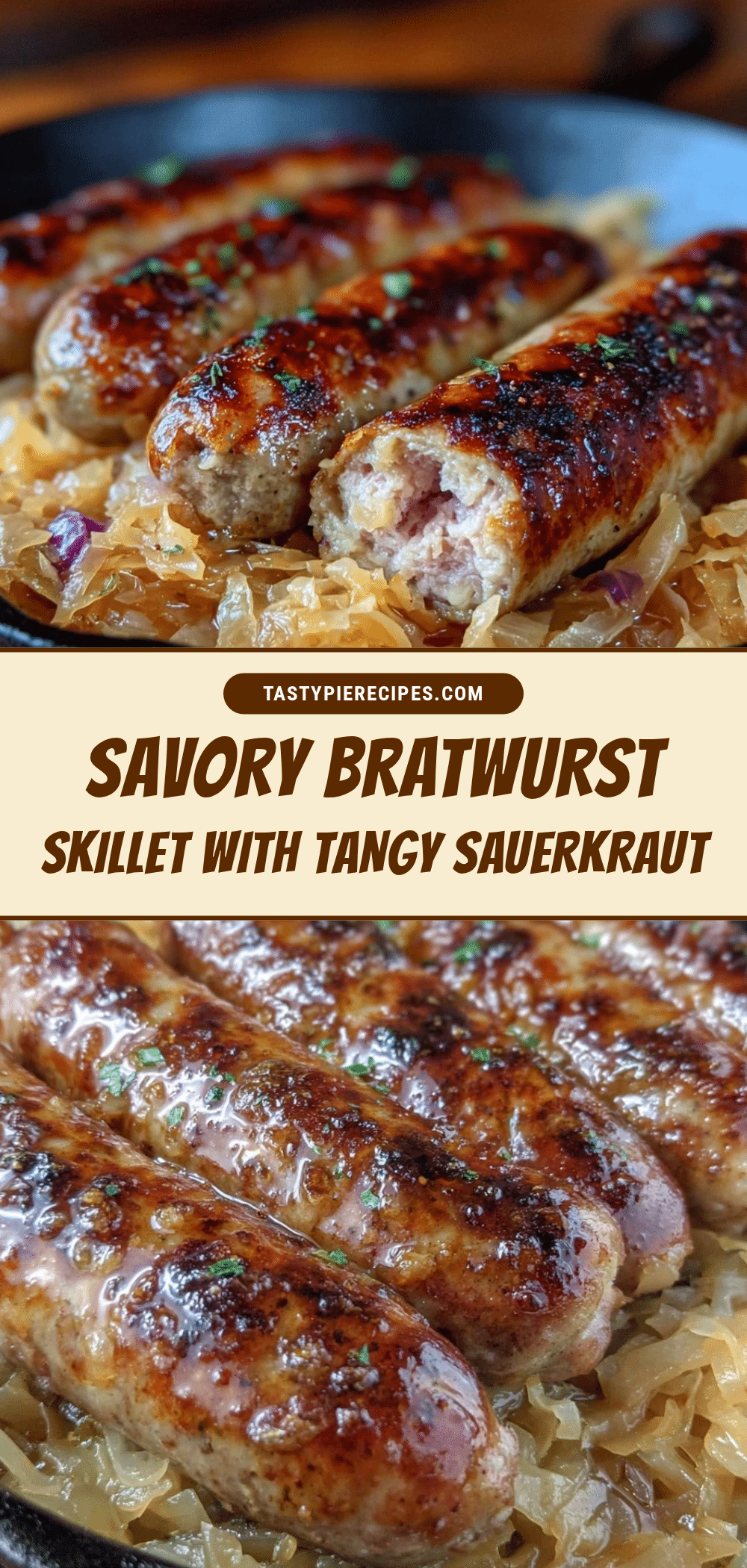
Savory Bratwurst Skillet Recipe with Tangy Sauerkraut and Onions

A quick and easy skillet meal combining juicy bratwurst, caramelized onions, and tangy sauerkraut for a comforting and flavorful dinner.
- Prep Time: 5 minutes
- Cook Time: 25 minutes
- Total Time: 30 minutes
- Yield: 4 servings 1x
- Category: Main Course
- Cuisine: German
Ingredients
- 4 bratwurst links (about 1.5 lbs / 680 g), fresh or pre-cooked
- 2 medium yellow onions, thinly sliced
- 1 cup sauerkraut (150 g), drained
- 2 tablespoons butter
- 1 tablespoon olive oil
- 2 cloves garlic, minced
- 1 teaspoon caraway seeds (optional)
- Salt and freshly ground black pepper, to taste
- 2 tablespoons fresh parsley, chopped
Instructions
- Prep the ingredients: Peel and thinly slice the yellow onions, mince the garlic cloves, and drain the sauerkraut well to avoid excess liquid in the skillet.
- Caramelize the onions: Heat 2 tablespoons of butter over medium heat in your skillet. Add the sliced onions and a pinch of salt. Stir occasionally, cooking until the onions turn golden brown and sweet-smelling, about 12-15 minutes.
- Brown the bratwurst: Push the onions to one side of the skillet. Add 1 tablespoon olive oil to the empty space, then place the bratwurst links in the pan. Brown on all sides, turning frequently, about 8-10 minutes. If using pre-cooked bratwurst, reduce time accordingly just to heat through and brown.
- Add garlic and sauerkraut: Stir the minced garlic into the onions and bratwurst. Then add the drained sauerkraut and sprinkle in 1 teaspoon caraway seeds (if using). Mix gently and warm through for 2-3 minutes.
- Season and finish: Taste and season with salt and freshly ground black pepper as needed. Remove from heat and sprinkle chopped fresh parsley over the top.
Notes
Slowly caramelize onions over medium heat to develop natural sweetness without burning. Drain sauerkraut well to avoid watery skillet. Let bratwurst sit undisturbed for a couple of minutes on each side to build a crisp crust. Can substitute turkey or chicken sausage for a lighter option. Leftovers store well for up to 3 days in the fridge and can be frozen for up to 2 months.
Nutrition
- Serving Size: 1 serving (approxima
- Calories: 375
- Sugar: 5
- Sodium: 700
- Fat: 27
- Saturated Fat: 10
- Carbohydrates: 9
- Fiber: 2.5
- Protein: 24
Keywords: bratwurst, sauerkraut, skillet recipe, caramelized onions, quick dinner, German cuisine, comfort food