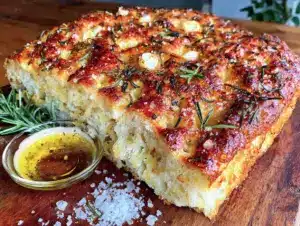
The third loaf of sourdough I baked was a disaster. Dense, gummy, and honestly – it went straight to the compost bin. I was so frustrated, I almost poured my starter down the drain. But that jar of bubbly, tangy discard sitting in the fridge? That felt like a different story. It felt like potential, not failure. I started experimenting, trying to find a use for it that didn’t require the patience of a saint or a perfectly proofed dough. That’s when this same-day sourdough discard focaccia happened.
It was a Tuesday afternoon, and I had a bowl of discard I needed to use. I didn’t have time for an overnight rise. I just wanted bread, and I wanted it fast. I threw together a simple dough, crossed my fingers, and waited. Four hours later, I pulled a pan of the most gloriously puffy, golden-brown focaccia out of the oven. The smell alone was worth the experiment. My husband walked in, tore off a corner, and just stood there, chewing, with this look of pure surprise on his face.
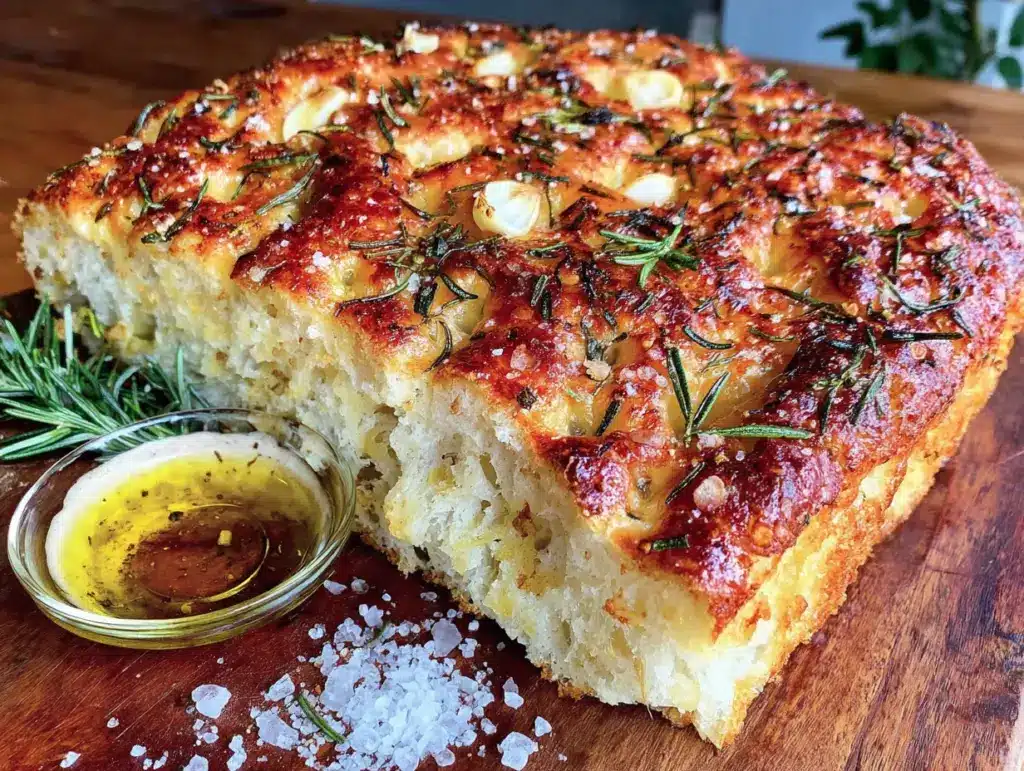
That was the moment I knew this recipe was a keeper. It wasn’t just good for a quick bread – it was good, period. The crumb was airy, the crust was perfectly crisp, and that signature sourdough tang was there, but mellow and friendly. It had all the soul of a slow-fermented loaf without the wait. Honestly, this same-day sourdough discard focaccia has become my go-to, and I have a feeling it’s about to become yours, too.
Why You’ll Love This Recipe
This isn’t just another bread recipe. It’s a solution to a problem every sourdough baker faces: what to do with all that discard. And it solves it in the most delicious way possible.
- Same-Day Satisfaction: From mixing bowl to dinner table in under 5 hours. No overnight waits, no complicated schedules.
- Forgiving & Foolproof: This dough is incredibly wet and sticky, which is exactly what you want. It’s almost impossible to overwork, making it perfect for beginners.
- Uses That Discard: Finally, a recipe that uses a full cup of sourdough discard. It’s the perfect way to use up that tangy byproduct without any waste.
- Incredible Texture: You get a shatteringly crisp, olive-oil-fried bottom crust and a light, airy, almost cloud-like interior. It’s the best of both worlds.
- Endlessly Customizable: The plain version is a masterpiece, but it’s also a blank canvas for herbs, cheeses, garlic, or whatever you have on hand.
What makes this my best version is the technique. Instead of a stiff dough, we use a very high-hydration, almost batter-like mixture. This, combined with the tangy discard, creates steam and structure, giving you that open, holey crumb without any kneading. It’s comfort food reimagined – faster, more forgiving, but with the same soul-soothing satisfaction of tearing into a warm piece of bread.
What Ingredients You Will Need
The beauty of this same-day sourdough discard focaccia is its simplicity. You likely have everything you need in your pantry right now. Each ingredient plays a specific role in creating that perfect texture and flavor.
- Bread Flour (3 ½ cups / 440g): This is my go-to for structure. The higher protein content in bread flour creates more gluten, giving the focaccia its chewy, airy crumb. You can use all-purpose flour, but the texture will be slightly less open and a bit softer. I prefer King Arthur or Bob’s Red Mill for consistent results.
- Warm Water (1 ½ cups / 360ml): The water needs to be lukewarm, around 90-100°F (32-38°C). Too hot, and it will kill the yeast in the discard; too cold, and the fermentation will be sluggish. It helps the ingredients come together and activates the fermentation process.
- Sourdough Discard (1 cup / 240g): This is the star! Use unfed, cold discard straight from the fridge. It adds that signature tang and helps with browning. The yeast and bacteria in the discard are still active enough to help the dough rise, even if it’s not bubbly. A mature, well-established starter gives the best flavor.
- Olive Oil (½ cup / 120ml, plus more for the pan): Don’t skimp on this. Olive oil is not just for flavor; it’s a key structural element. A generous amount in the pan fries the bottom of the dough, creating that iconic crispy, golden crust. Use a good-quality extra virgin olive oil for the best taste.
- Active Dry Yeast (1 ½ teaspoons): This is our insurance policy for a same-day rise. The discard alone might not be strong enough to lift this heavy, wet dough in just a few hours. A small amount of commercial yeast guarantees a reliable, quick rise.
- Sea Salt (2 teaspoons): I use fine sea salt for the dough and flaky sea salt for the top. Salt controls fermentation and, more importantly, enhances all the flavors. Don’t leave it out.
- Optional Toppings: Fresh rosemary, flaky sea salt, cherry tomatoes, garlic cloves, or everything bagel seasoning. The possibilities are endless.
Equipment Needed
You don’t need a stand mixer or any fancy gadgets for this recipe. A little elbow grease and a few basic tools are all it takes.
- 9×13-inch Metal Baking Pan: A metal pan is crucial. It conducts heat better than glass or ceramic, giving you that perfectly browned and crispy bottom crust. A dark-colored metal pan works best.
- Large Mixing Bowl: Any bowl big enough to hold the dough and allow for expansion will work.
- Rubber Spatula or Dough Scraper: The dough is very wet and sticky. A flexible spatula or a plastic dough scraper is your best friend for mixing and folding.
- Plastic Wrap or a Shower Cap: You need something to cover the dough while it rises to prevent a skin from forming. A reusable shower cap is my favorite hack – it’s the perfect size for a mixing bowl!
- Kitchen Scale (Optional but highly recommended): For consistent results, weighing your ingredients is a game-changer. It’s more accurate than measuring by volume.
Preparation Method
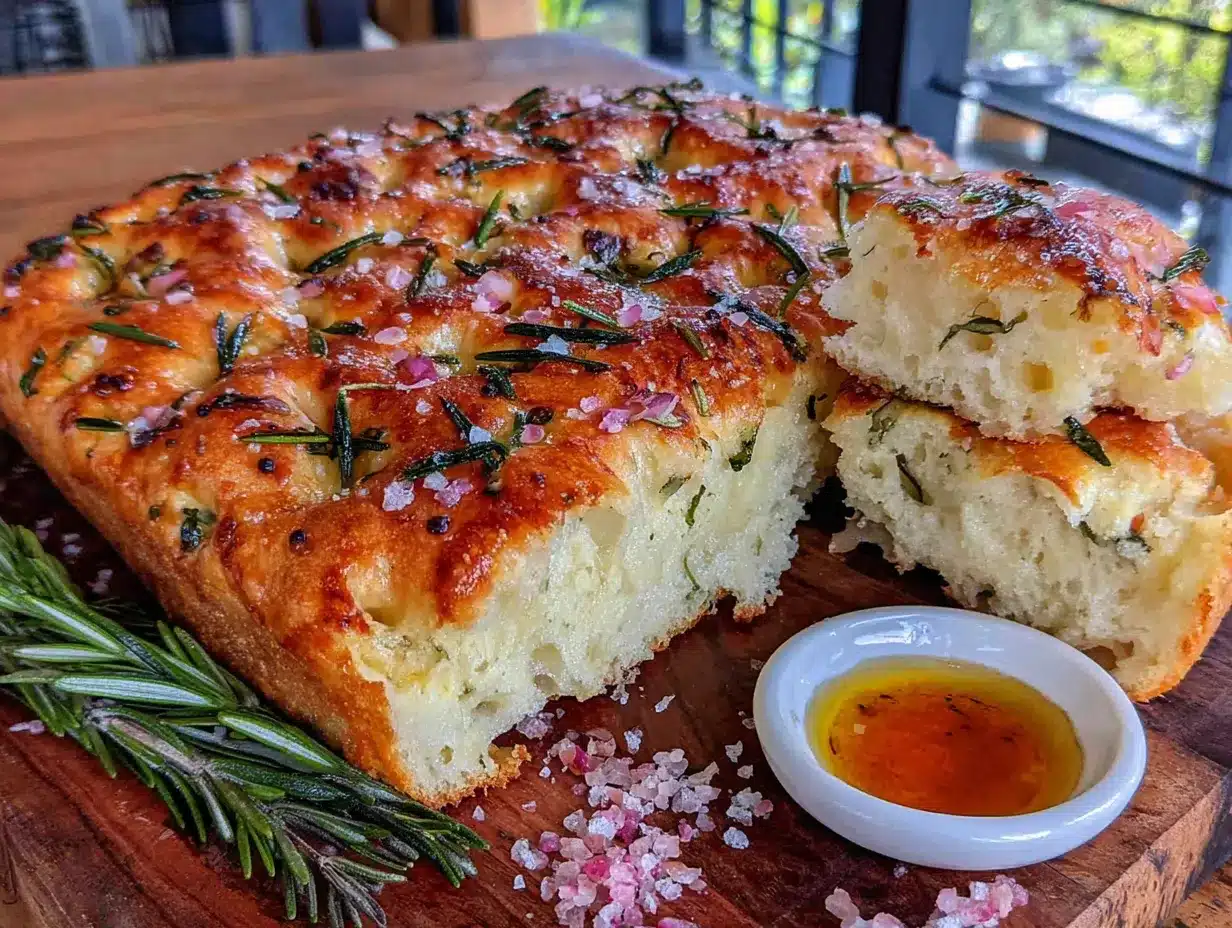
Let’s get to the fun part. This process is more about gentle handling than brute force. Trust the sticky dough – it will reward you.
- Mix the Dough (5 minutes): In your large bowl, combine the warm water and active dry yeast. Let it sit for 5 minutes until it looks a little creamy or foamy. This “proofs” the yeast to make sure it’s active. Add the sourdough discard and ¼ cup of the olive oil. Whisk everything together until it’s well combined. It will look a bit like a thick, chunky milkshake.
- Add the Dry Ingredients (2 minutes): Add the bread flour and fine sea salt to the wet mixture. Using your rubber spatula, mix until a shaggy, sticky dough forms. There should be no dry bits of flour left. The dough will be very wet and sticky – that’s exactly what you want. Don’t be tempted to add more flour.
- The First Rise (Bulk Fermentation) (2-3 hours): Cover the bowl tightly with plastic wrap or your shower cap. Place it in a warm, draft-free spot in your kitchen. Let it rise until it has doubled in size and is bubbly and jiggly. This can take anywhere from 2 to 3.5 hours, depending on the warmth of your kitchen. A good sign is that the surface looks domed and has small bubbles.
- Prepare the Pan (5 minutes): While the dough is rising, pour ¼ cup of olive oil into your 9×13-inch metal baking pan. Use your fingers to spread the oil all over the bottom and up the sides of the pan. This generous amount of oil is non-negotiable for that perfect crispy crust.
- Fold and Turn (5 minutes): Once the dough has doubled, it’s time to strengthen it without kneading. Lightly oil your hands and your spatula. Gently scrape the dough out of the bowl and into the oiled pan. It will look like a puddle. Don’t panic. Let it rest for 10 minutes.
- The Second Rise (Pan Proofing) (1-2 hours): After the rest, gently coax the dough to spread towards the edges of the pan. It will probably pull back – that’s okay. Cover the pan with plastic wrap and let it rise again. After about an hour, it should have relaxed and spread out significantly. You want it to be puffy and full of bubbles.
- Dimple the Dough (5 minutes): About 30 minutes before baking, preheat your oven to 425°F (220°C). Once the dough is puffy, generously drizzle the top with the remaining olive oil. Now for the best part: using your fingertips, press deep dimples all over the surface of the dough. Press all the way down to the bottom of the pan. This isn’t just for looks – it creates those iconic focaccia craters. If you’re adding toppings like rosemary or tomatoes, press them into the dimples now. Sprinkle generously with flaky sea salt.
- Bake to Golden Perfection (20-25 minutes): Place the pan on the middle rack of your preheated oven. Bake for 20-25 minutes, rotating the pan halfway through, until the top is a deep golden brown and the edges look crispy and caramelized. The bottom should be a deep, even brown when you lift a corner to check.
- Cool (The Hardest Part) (10 minutes): Let the focaccia cool in the pan on a wire rack for at least 10 minutes. This allows the steam to finish cooking the interior and helps the crust stay crisp. Then, carefully lift it out of the pan and transfer it to a cutting board. Slice and serve warm.
Cooking Tips & Techniques
I’ve made this same-day sourdough discard focaccia more times than I can count, and I’ve learned a few things the hard way. Here are my best tips to guarantee success.
- Trust the Wet Dough: The biggest mistake people make is adding too much flour because the dough feels too sticky. Resist! This high-hydration dough is what creates the airy, open crumb. The olive oil in the pan will prevent it from sticking. Think of it as a very thick batter, not a traditional bread dough.
- Don’t Rush the Rise: The timing is a guideline, not a rule. If your kitchen is cool, the first rise might take 4 hours. If it’s warm, it might be ready in 2. Look for the visual cues: doubled in size, bubbly, and jiggly. A warm spot near your oven or on top of the fridge is perfect.
- The Dimple is a Commitment: When you dimple the dough, you’re creating pockets for the oil and your toppings. Don’t be shy. Press all the way down to the bottom of the pan with confidence. If the dough feels resistant, let it rest for 5 minutes and try again.
- Watch the Bottom: The bottom crust is the secret weapon of this focaccia. If it’s not deeply browned, it won’t be as crispy. If your oven runs hot, you might need to bake it on a lower rack for the last 5 minutes to get that perfect color without burning the top.
Variations & Adaptations
This recipe is a fantastic base for creativity. Once you’ve mastered the plain version, the possibilities are endless. Here are a few of my favorite twists.
- Classic Rosemary & Sea Salt: The simplest and most elegant. Before baking, press fresh rosemary sprigs into the dimples and sprinkle generously with flaky sea salt. The aroma is intoxicating.
- Cherry Tomato & Garlic: Halved cherry tomatoes and thinly sliced garlic cloves get roasted right into the dough. They become sweet, jammy, and absolutely delicious. This is my go-to for a summer appetizer.
- Everything Bagel Focaccia: Before baking, sprinkle the top with everything bagel seasoning. The combination of sesame, poppy, garlic, and onion with the olive oil is a match made in heaven. It’s perfect for sandwiches.
- Cheesy Herb Focaccia: After dimpling, sprinkle the top with a generous handful of shredded Parmesan or crumbled feta, along with some dried oregano or thyme. The cheese gets crispy and browned in the oven.
- Gluten-Free Adaptation: While I haven’t perfected this specific recipe with gluten-free flour, a 1:1 gluten-free baking flour blend can work. You’ll need to add a bit more water (about 2-3 tablespoons) as gluten-free flours are very thirsty. The texture will be more delicate and less airy, but still delicious.
Serving & Storage Suggestions
This same-day sourdough discard focaccia is best enjoyed the day it’s made, still warm from the oven. But let’s be real – leftovers are a gift.
- Serving: Serve it warm as a side to soups and salads, especially a hearty minestrone or a simple creamy strawberry basil lemonade panna cotta for a sweet finish. It’s also incredible as the base for sandwiches, or just torn and dipped in good olive oil and balsamic vinegar.
- Storage: Store leftover focaccia in an airtight container or wrapped tightly in plastic wrap at room temperature for up to 2 days. Do not refrigerate it, as the cold will dry it out and make it stale faster.
- Freezing: This focaccia freezes beautifully. Slice it or leave it whole, wrap it tightly in plastic wrap, then in a layer of foil, and freeze for up to 3 months. To reheat, place it directly from the freezer into a 350°F (175°C) oven for 10-15 minutes, or until warmed through and the crust is crisp again.
- Reheating: The best way to revive day-old focaccia is in the oven or an air fryer. A quick 5-minute blast at 350°F (175°C) will bring back that crispy crust and soft interior. The microwave will make it soggy, so avoid it if you can.
Nutritional Information & Benefits
While this is a treat, it’s made with real, whole ingredients. Here’s a general idea of what you’re getting per serving. This recipe yields about 12 servings.
- Estimated Nutritional Values (per serving): Calories: 280 | Fat: 14g | Carbohydrates: 34g | Protein: 6g | Fiber: 1g
- Health Benefits of Key Ingredients: Sourdough fermentation breaks down some of the gluten and phytic acid, making the nutrients in the flour easier for your body to absorb. The olive oil is a source of healthy monounsaturated fats and antioxidants. It’s a more digestible and flavorful option than many commercially made breads.
- Dietary Considerations: This recipe is vegetarian. To make it vegan, simply ensure you’re using a vegan-friendly sugar (if using any) and skip any cheese toppings. It contains gluten and is not suitable for a gluten-free diet unless adapted.
Conclusion
This same-day sourdough discard focaccia has genuinely changed my baking routine. It took a byproduct I used to feel guilty about and turned it into something I actively look forward to making. It’s proof that you don’t need a complicated schedule or years of experience to make incredible bread at home. It’s forgiving, it’s fast, and it’s ridiculously delicious. I love that I can decide to make it at lunchtime and have it on the table for dinner. It makes me feel like a kitchen magician, even on a busy Tuesday.
I would love to hear how yours turns out! Did you try a fun topping combination? Did it disappear as fast as it did in my house? Drop a comment below and let me know. And if you’re looking for another way to use up that discard, you absolutely have to try this decadent dark chocolate stout brownie cake for a sweet treat. Happy baking!
Frequently Asked Questions
Can I use all-purpose flour instead of bread flour?
Yes, you can. The focaccia will still be delicious, but the texture will be slightly less chewy and the crumb will be a bit tighter. Bread flour’s higher protein content gives the focaccia more structure and helps it rise higher.
My dough isn’t rising. What went wrong?
This is usually a temperature issue. Your kitchen might be too cold. Try placing the bowl in a slightly warmer spot, like on top of your refrigerator or in your oven with the light on (but the oven off). Also, make sure your yeast wasn’t expired and that your water wasn’t too hot, which would have killed it.
Can I make this focaccia gluten-free?
I haven’t tested this specific recipe with a gluten-free flour blend, but it is possible. Use a high-quality 1:1 gluten-free baking flour blend. You may need to add a little extra water, as gluten-free flours tend to absorb more liquid. The texture will be more delicate and less airy than the wheat version.
How do I get a crispier bottom crust?
The key is a generous amount of olive oil in the pan and a hot oven. Make sure you use a metal pan, not glass or ceramic. If your bottom crust isn’t browning, try baking the focaccia on the lowest rack of your oven for the last 5 minutes of baking.
Can I use a different type of salt?
For the dough, use fine sea salt or table salt so it dissolves evenly. For the topping, flaky sea salt like Maldon is ideal. It provides a wonderful crunchy texture and a burst of salty flavor that doesn’t dissolve into the dough. Avoid using coarse kosher salt for the topping, as the crystals are too large and can be unpleasantly crunchy.
Pin This Recipe!
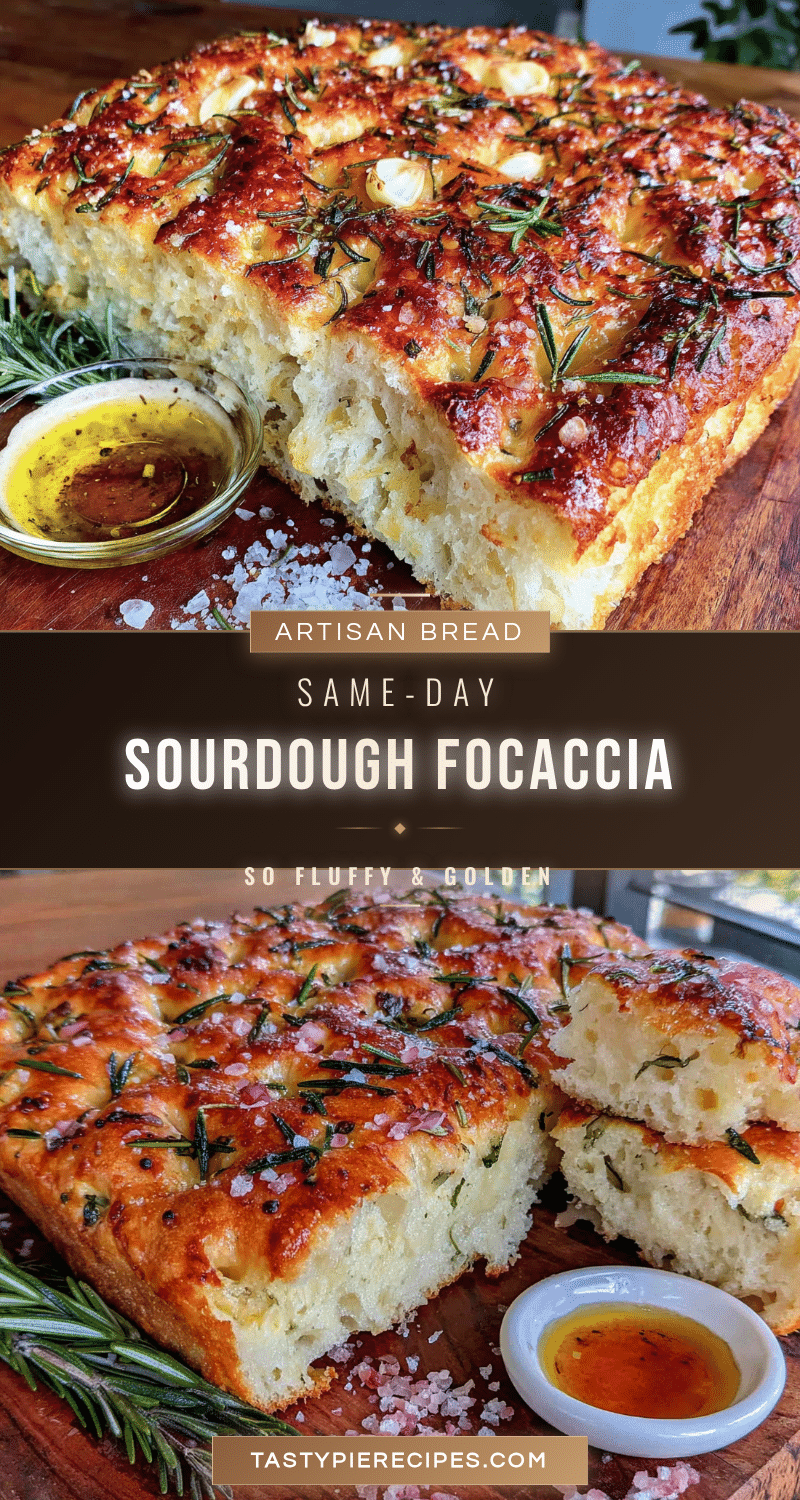
Same-Day Sourdough Discard Focaccia: Easy & Fluffy

This same-day sourdough discard focaccia is a quick and forgiving recipe that transforms sourdough discard into a gloriously puffy, golden-brown bread with a crispy crust and airy interior. Ready in under 5 hours, it’s the perfect solution for using up discard without an overnight rise.
- Prep Time: 15 minutes
- Cook Time: 25 minutes
- Total Time: 4 hours 40 minutes
- Yield: 12 servings 1x
- Category: Bread
- Cuisine: Italian
Ingredients
- 3 ½ cups (440g) bread flour
- 1 ½ cups (360ml) warm water (90-100°F / 32-38°C)
- 1 cup (240g) sourdough discard (unfed, cold)
- ½ cup (120ml) olive oil, plus more for the pan
- 1 ½ teaspoons active dry yeast
- 2 teaspoons fine sea salt
- Optional toppings: fresh rosemary, flaky sea salt, cherry tomatoes, garlic cloves, everything bagel seasoning
Instructions
- Mix the Dough (5 minutes): In a large bowl, combine warm water and active dry yeast. Let sit for 5 minutes until creamy or foamy. Add sourdough discard and ¼ cup olive oil. Whisk until well combined.
- Add the Dry Ingredients (2 minutes): Add bread flour and fine sea salt to the wet mixture. Mix with a rubber spatula until a shaggy, sticky dough forms with no dry bits. The dough will be very wet and sticky.
- The First Rise (Bulk Fermentation) (2-3 hours): Cover the bowl tightly with plastic wrap or a shower cap. Place in a warm, draft-free spot. Let rise until doubled in size, bubbly, and jiggly (2-3.5 hours).
- Prepare the Pan (5 minutes): Pour ¼ cup olive oil into a 9×13-inch metal baking pan. Spread oil all over the bottom and up the sides.
- Fold and Turn (5 minutes): Once dough has doubled, lightly oil your hands and spatula. Gently scrape dough into the oiled pan. Let rest for 10 minutes.
- The Second Rise (Pan Proofing) (1-2 hours): Gently coax dough to spread towards edges of pan. Cover with plastic wrap and let rise until puffy and full of bubbles (about 1-2 hours).
- Dimple the Dough (5 minutes): About 30 minutes before baking, preheat oven to 425°F (220°C). Drizzle remaining olive oil on top. Use fingertips to press deep dimples all over the surface, pressing to the bottom of the pan. Add toppings and sprinkle with flaky sea salt.
- Bake to Golden Perfection (20-25 minutes): Bake on middle rack for 20-25 minutes, rotating halfway through, until top is deep golden brown and edges are crispy. Bottom should be deep brown.
- Cool (10 minutes): Let focaccia cool in pan on a wire rack for at least 10 minutes. Then lift out, transfer to cutting board, slice, and serve warm.
Notes
Trust the wet dough—do not add extra flour. The high hydration creates an airy crumb. For a crispier bottom crust, use a metal pan and bake on the lowest rack for the last 5 minutes if needed. Store at room temperature for up to 2 days; freeze for up to 3 months.
Nutrition
- Serving Size: 1 serving (1/12 of r
- Calories: 280
- Sodium: 390
- Fat: 14
- Saturated Fat: 2
- Carbohydrates: 34
- Fiber: 1
- Protein: 6
Keywords: sourdough discard, focaccia, same-day bread, easy bread, sourdough recipe, discard recipe, quick bread