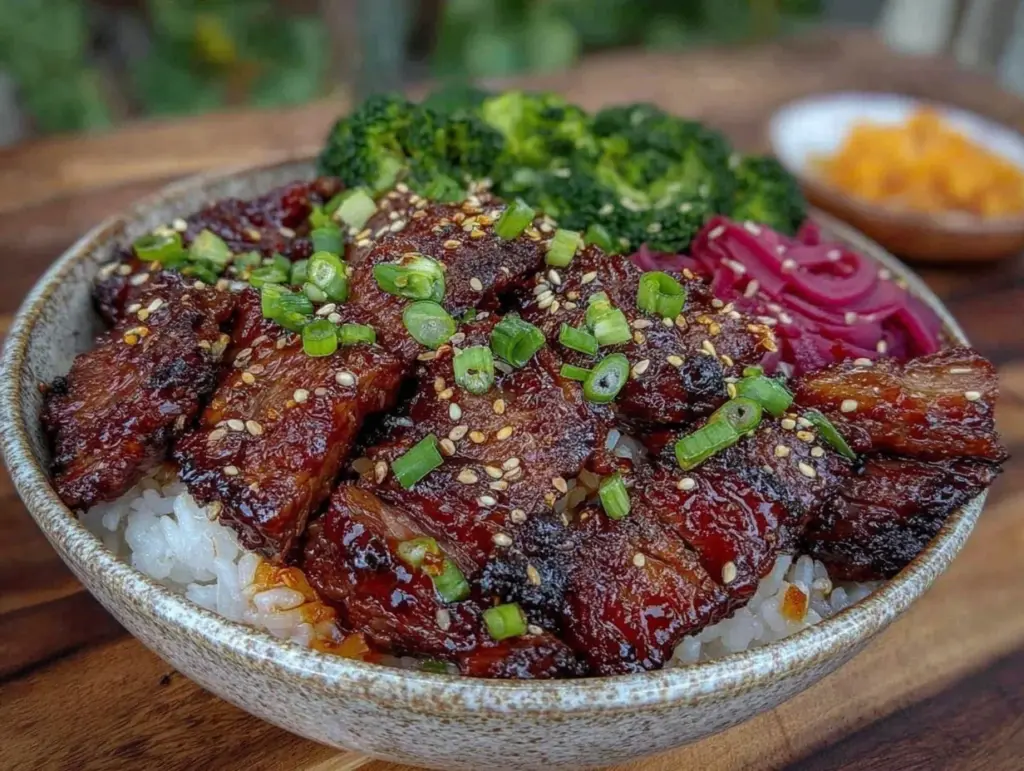
Let me tell you, the sizzle of ground beef hitting a hot pan mingled with the sweet-spicy aroma of gochujang sauce is enough to make anyone’s mouth water. The first time I made these Flavorful Korean Beef Bowls with Spicy Gochujang Sauce, I was instantly hooked—the kind of moment where you pause, take a deep breath, and just smile because you know you’re onto something truly special. Years ago, when I was knee-high to a grasshopper, my family’s dinners were simple, but this recipe brings a bold punch that feels like a warm hug after a long day.
I stumbled upon this gem on a rainy weekend, trying to recreate the taste of a Korean restaurant I’d visited once. Honestly, it’s dangerously easy and packed with pure, nostalgic comfort. My family couldn’t stop sneaking the beef off the stove (and I can’t really blame them). This recipe is perfect for potlucks, a sweet treat for your kids’ lunchboxes, or just to brighten up your Pinterest dinner board when you want something quick but impressive.
After testing it multiple times in the name of research, of course, it’s become a staple for family gatherings and gifting. If you love bold, balanced flavors and crave a dish that’s as satisfying as it is simple, you’re going to want to bookmark this one. Let’s get right into the magic behind these Korean Beef Bowls with that spicy gochujang sauce that steals the show every time!
Why You’ll Love This Recipe
Trust me, this recipe has been through the wringer in my kitchen, and here’s why it stands out:
- Quick & Easy: Comes together in under 30 minutes—perfect for busy weeknights or last-minute cravings.
- Simple Ingredients: No fancy grocery trips needed; you likely already have everything in your pantry or fridge.
- Perfect for Dinner or Meal Prep: Great for cozy dinners or packing into containers for the week ahead.
- Crowd-Pleaser: Always gets rave reviews from kids and adults alike, even those who say they don’t like spicy food (the gochujang sauce is balanced just right).
- Unbelievably Delicious: The combo of savory beef and spicy-sweet gochujang with a hint of garlic is pure magic on the tongue.
What sets this recipe apart? I blend the gochujang with a splash of soy sauce, honey, and toasted sesame oil to create a sauce that’s rich but not overpowering. The beef is cooked just right—juicy, tender, and coated in this sauce that clings perfectly. Plus, the addition of fresh green onions and a sprinkle of sesame seeds takes it over the top. This isn’t just another Korean beef bowl recipe—it’s my best version, tested and tweaked until it felt like a warm, satisfying hug on a plate.
You know that moment when you close your eyes after the first bite because it’s just that good? Yeah, this recipe delivers that feeling every time. It’s comfort food reimagined—fast, flavorful, and just right for impressing guests without any stress.
What Ingredients You Will Need
This recipe uses simple, wholesome ingredients to deliver bold flavor and satisfying texture without the fuss. Most are pantry staples, but the gochujang sauce is the real MVP here. Feel free to swap or adjust based on your pantry or preferences.
- For the Beef:
- 1 lb (450g) ground beef (I prefer 80/20 for juiciness)
- 1 tablespoon vegetable oil (for cooking)
- 3 cloves garlic, minced (adds punch and aroma)
- 1 small yellow onion, finely diced (sweetness and texture)
- For the Spicy Gochujang Sauce:
- 3 tablespoons gochujang (Korean chili paste; look for Chung Jung One brand for authentic flavor)
- 2 tablespoons soy sauce (use low-sodium if preferred)
- 1 tablespoon honey or brown sugar (balances heat with sweetness)
- 1 teaspoon toasted sesame oil (adds nutty depth)
- 1 teaspoon rice vinegar (for a touch of tang)
- For Serving:
- Cooked jasmine or short-grain rice (about 4 cups cooked)
- 2 green onions, thinly sliced (freshness and color)
- 1 tablespoon toasted sesame seeds (for crunch and visual appeal)
- Optional: sliced cucumber or steamed broccoli (for extra veggies)
If you want a gluten-free version, swap soy sauce with tamari. For a vegetarian twist, try substituting ground beef with crumbled firm tofu or cooked mushrooms. In summer, fresh cucumbers or radishes on top add a refreshing crunch.
Equipment Needed
- Large non-stick or cast-iron skillet (for even browning and easy cleanup)
- Wooden spoon or spatula (to break up beef as it cooks)
- Measuring spoons and cups (for precise seasoning)
- Sharp knife and cutting board (for chopping garlic, onions, and green onions)
- Rice cooker or pot with lid (for perfectly cooked rice)
If you don’t have a cast-iron skillet, a heavy-bottomed stainless steel pan works just fine. I personally love cast iron for its heat retention, but either will do. For budget-friendly options, non-stick skillets keep cleanup quick and easy—trust me, I’ve tried them all!
Preparation Method
- Prepare the rice: Start by cooking about 1 1/3 cups (250g) of dry jasmine or short-grain rice according to package instructions; this usually takes 15-20 minutes. Fluff it with a fork once done and keep warm.
- Make the sauce: In a small bowl, whisk together 3 tablespoons gochujang, 2 tablespoons soy sauce, 1 tablespoon honey, 1 teaspoon toasted sesame oil, and 1 teaspoon rice vinegar. Set aside so the flavors meld.
- Cook the aromatics: Heat 1 tablespoon vegetable oil in a large skillet over medium-high heat. Add the minced garlic and diced onion, sautéing until soft and fragrant—about 2-3 minutes. Watch closely so the garlic doesn’t burn.
- Brown the beef: Add 1 lb (450g) ground beef to the skillet. Using a wooden spoon, break it into small pieces. Cook for about 5-7 minutes, stirring occasionally until fully browned and no pink remains. Drain excess fat if necessary.
- Add the sauce: Pour the prepared gochujang sauce over the beef. Stir well to coat every bit of meat. Let it simmer for 2-3 minutes until the sauce thickens slightly, coating the beef in a glossy, spicy glaze.
- Check seasoning: Taste and adjust with extra soy sauce or honey if you want it saltier or sweeter. A squeeze of lime juice here also brightens things up nicely.
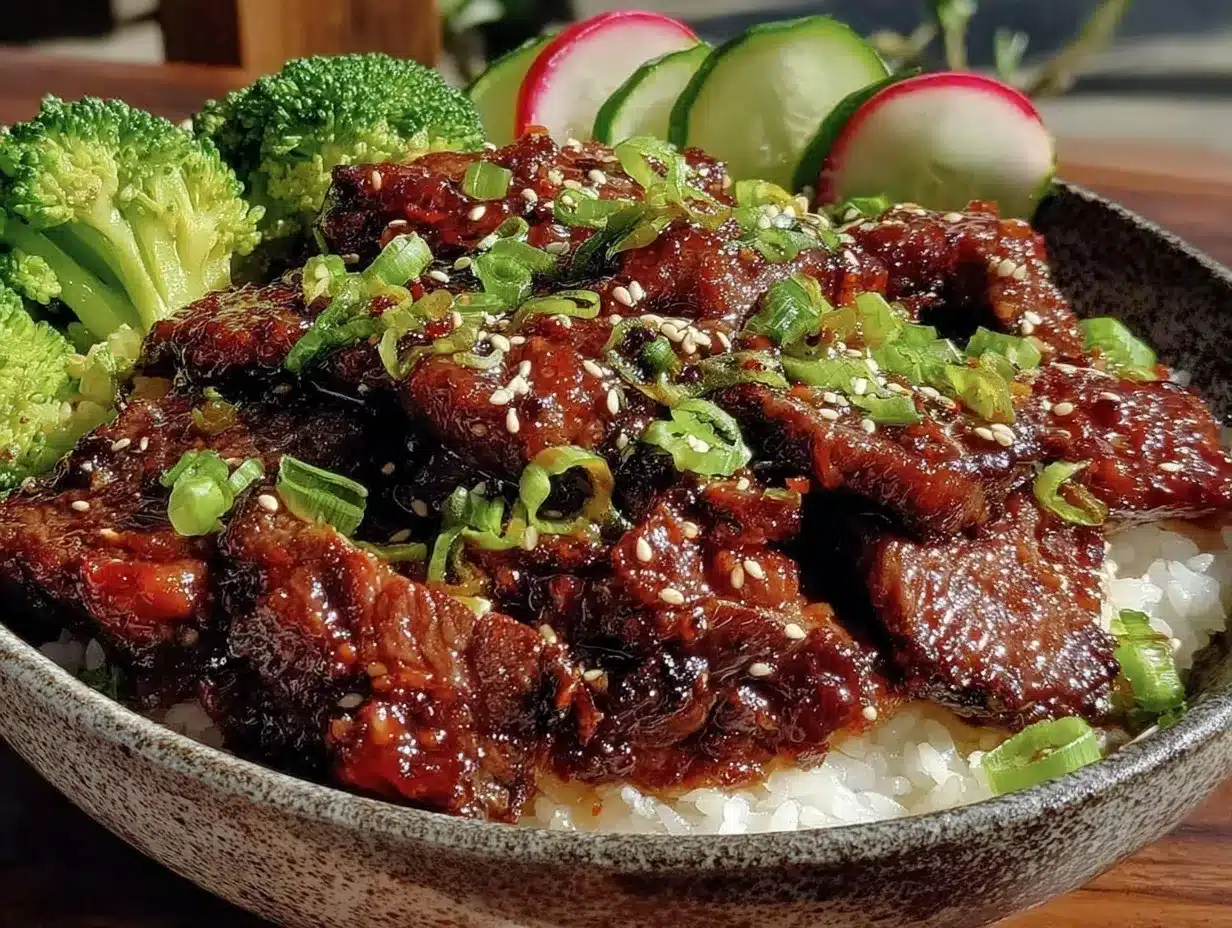
- Assemble the bowls: Scoop a generous portion of warm rice into bowls. Top with the spicy Korean beef mixture. Garnish with sliced green onions and a sprinkle of toasted sesame seeds. Add optional veggies like cucumber slices or steamed broccoli if you like.
Pro tip: If your sauce is too thick, add a splash of water or beef broth to loosen it up. Also, don’t rush browning the beef; letting it caramelize slightly gives that savory depth you want.
Cooking Tips & Techniques
To nail these Korean Beef Bowls every time, a few tricks go a long way. First, don’t overcrowd your skillet when browning the beef—too much meat at once causes steaming instead of searing. Cook in batches if needed.
Use fresh garlic and finely diced onion for that perfect balance of savory and sweet. I’ve learned that a little patience sautéing these aromatics pays off big time in flavor.
When mixing the gochujang sauce, taste as you go. The honey balances the heat, but if you like it hotter, a pinch of red pepper flakes can be added. Also, toasted sesame oil is potent—just a little gives a nutty aroma without overpowering.
Timing is key: get your rice started first, then prep and cook the beef while the rice is finishing. Multitasking like this keeps dinner on the table faster. Lastly, leftovers keep well and taste even better the next day as flavors meld—just reheat gently to avoid drying out the beef.
Variations & Adaptations
Want to mix it up? Here are some tasty variations I’ve tried:
- Vegetarian Version: Swap ground beef with crumbled firm tofu or cooked lentils. Add a splash more soy sauce for depth.
- Low-Carb Option: Serve over cauliflower rice or sautéed zucchini noodles instead of jasmine rice.
- Spiced-Up Twist: Add a teaspoon of freshly grated ginger to the garlic and onion for extra zing.
- Slow Cooker Adaptation: Brown beef and aromatics first, then toss everything into the slow cooker with sauce. Cook on low for 4 hours.
- Gluten-Free: Use tamari or coconut aminos in place of soy sauce.
Personally, I love adding a fried egg on top for brunch-style Korean Beef Bowls—runny yolk mixing into the spicy beef is pure bliss. Feel free to experiment and find your perfect combo!
Serving & Storage Suggestions
These beef bowls are best served warm, fresh off the stove, with steaming rice and crisp green onions on top. Presentation-wise, a sprinkle of sesame seeds and a few cucumber slices add a nice pop of color and texture.
Pair them with simple sides like steamed broccoli or kimchi to keep the Korean theme going strong. For drinks, a cold glass of iced green tea or a light beer complements the spicy, savory flavors beautifully.
To store, place leftovers in an airtight container in the refrigerator for up to 4 days. Reheat gently in a skillet or microwave with a splash of water to keep the beef moist. These bowls also freeze well; thaw overnight in the fridge before reheating.
The flavors mellow and deepen overnight, so if you can wait, leftovers taste even better the next day—perfect for meal prep or quick lunches.
Nutritional Information & Benefits
Each serving of these Korean Beef Bowls packs about 450-500 calories, with approximately 30g protein, 35g carbohydrates, and 20g fat (depending on beef fat content and rice portion). The gochujang sauce adds flavor without excessive calories, and the fresh green onions contribute a small boost of vitamins.
Key benefits come from the protein-rich beef, which supports muscle health, and the fermented gochujang, which can aid digestion. Using jasmine rice provides quick energy, but you can swap to brown rice for extra fiber.
This recipe can be adapted for gluten-free and low-carb diets by swapping soy sauce and rice, making it versatile for different dietary needs. Just keep an eye on allergens like soy and sesame if serving guests with sensitivities.
Personally, I appreciate how this dish balances indulgence with nutrition—comfort food that feels a little bit good for you, too.
Conclusion
In a nutshell, these Flavorful Korean Beef Bowls with Spicy Gochujang Sauce are a winner for anyone craving a fast, tasty, and satisfying meal. They’re easy to make, packed with bold flavors, and endlessly adaptable to your tastes or dietary needs.
I love this recipe because it brings a little bit of Korea into my kitchen without fuss or fancy ingredients. Plus, it always brings smiles around the dinner table. Whether you’re cooking for one or feeding a crowd, this recipe fits the bill.
Go ahead—give it a try, tweak the spice level or toppings, and make it your own. And hey, if you do, drop a comment below or share your version—I’m always eager to hear how you make these bowls your own. Happy cooking!
FAQs
Can I use ground turkey or chicken instead of beef?
Yes! Ground turkey or chicken works well but may need slightly less cooking time to avoid drying out. Adjust seasoning to taste.
What is gochujang, and where can I find it?
Gochujang is a Korean fermented chili paste that’s sweet, spicy, and savory. You can find it in most grocery stores’ Asian aisle or at specialty markets.
How spicy is this recipe?
The spice level is moderate and balanced by honey and soy sauce. You can reduce gochujang or add more honey if you prefer milder heat.
Can I make this recipe ahead of time?
Absolutely! Prepare the beef mixture and rice separately and store in the fridge. Reheat gently before serving.
What can I serve with Korean Beef Bowls?
Steamed or stir-fried veggies, kimchi, pickled radishes, or a simple cucumber salad all pair wonderfully with these bowls.
Pin This Recipe!
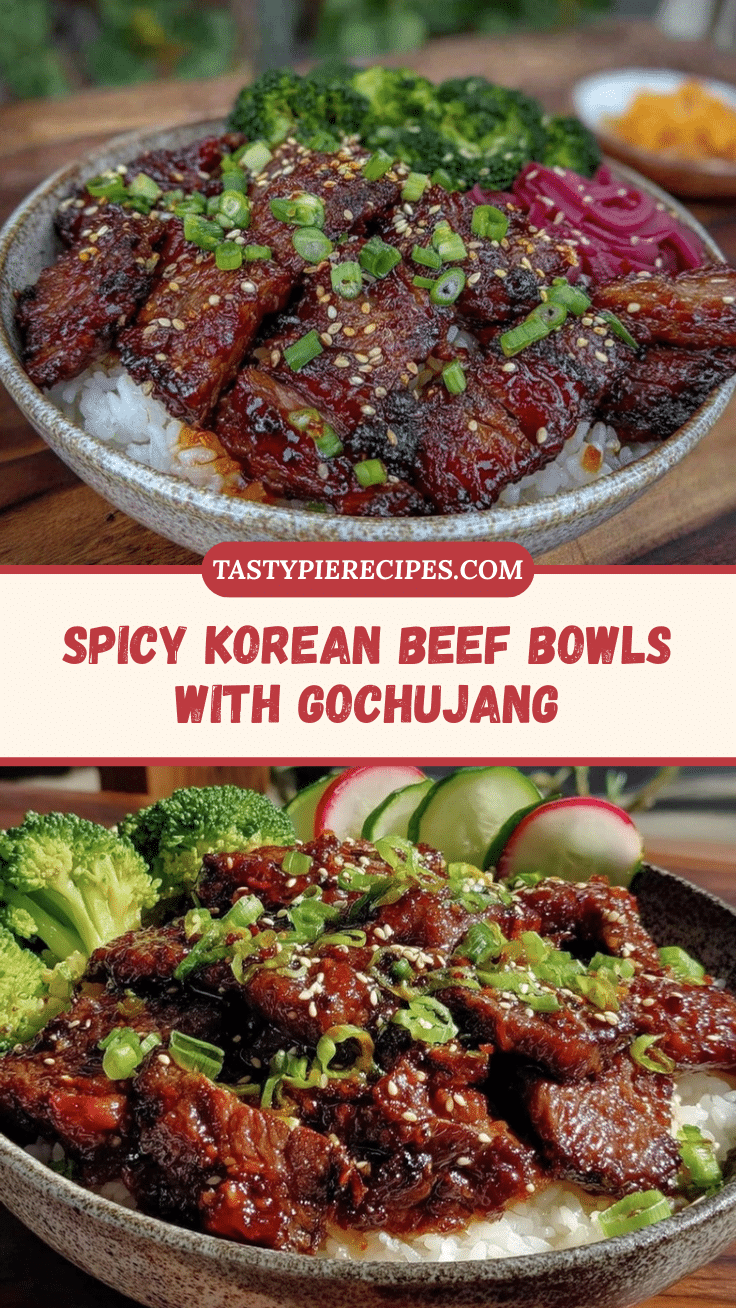
Flavorful Korean Beef Bowls Recipe Easy Spicy Gochujang Sauce Dinner

A quick and easy Korean beef bowl recipe featuring ground beef cooked in a spicy-sweet gochujang sauce, served over jasmine rice and garnished with green onions and sesame seeds. Perfect for weeknight dinners or meal prep.
- Prep Time: 10 minutes
- Cook Time: 20 minutes
- Total Time: 30 minutes
- Yield: 4 servings 1x
- Category: Main Course
- Cuisine: Korean
Ingredients
- 1 lb ground beef (80/20 preferred)
- 1 tablespoon vegetable oil
- 3 cloves garlic, minced
- 1 small yellow onion, finely diced
- 3 tablespoons gochujang (Korean chili paste)
- 2 tablespoons soy sauce (low-sodium preferred)
- 1 tablespoon honey or brown sugar
- 1 teaspoon toasted sesame oil
- 1 teaspoon rice vinegar
- 4 cups cooked jasmine or short-grain rice
- 2 green onions, thinly sliced
- 1 tablespoon toasted sesame seeds
- Optional: sliced cucumber or steamed broccoli
Instructions
- Cook about 1 1/3 cups (250g) dry jasmine or short-grain rice according to package instructions (about 15-20 minutes). Fluff with a fork and keep warm.
- In a small bowl, whisk together gochujang, soy sauce, honey, toasted sesame oil, and rice vinegar. Set aside.
- Heat vegetable oil in a large skillet over medium-high heat. Add minced garlic and diced onion; sauté for 2-3 minutes until soft and fragrant.
- Add ground beef to the skillet. Break into small pieces with a wooden spoon and cook for 5-7 minutes until fully browned. Drain excess fat if necessary.
- Pour the prepared gochujang sauce over the beef. Stir to coat and simmer for 2-3 minutes until sauce thickens slightly.
- Taste and adjust seasoning with extra soy sauce or honey if desired. Optionally add a squeeze of lime juice.
- Assemble bowls by scooping warm rice into bowls, topping with spicy beef mixture, sliced green onions, and toasted sesame seeds. Add optional veggies if desired.
Notes
If sauce is too thick, add a splash of water or beef broth to loosen. Do not overcrowd skillet when browning beef to ensure proper searing. Leftovers keep well for up to 4 days refrigerated and taste better the next day. For gluten-free, substitute soy sauce with tamari. For vegetarian, substitute beef with crumbled tofu or cooked mushrooms.
Nutrition
- Serving Size: 1 bowl (approximatel
- Calories: 475
- Sugar: 8
- Sodium: 700
- Fat: 20
- Saturated Fat: 7
- Carbohydrates: 35
- Fiber: 2
- Protein: 30
Keywords: Korean beef bowls, gochujang sauce, spicy beef recipe, easy dinner, weeknight meal, Korean cuisine, ground beef recipe