
“I swear, the best ideas hit when you least expect them,” my neighbor Lisa said as the rain drummed steadily outside her kitchen window. It was just one of those gray, soggy Sundays where staying indoors felt like the only option. I wasn’t really planning to cook much that day, but the aroma wafting from her simmering pot pulled me in like a magnet. Lisa wasn’t one to fuss in the kitchen—she called this her “fix-me-up” soup—and honestly, it looked like the kind of bone broth soup recipe that promised more than just warmth. It was about healing, comfort, and something deeper.
She told me it was a little family secret, something her grandmother made whenever someone felt off. There was something about the simplicity—bones slow-simmered with fresh vegetables and herbs—that turned into this rich, soothing elixir. I was skeptical at first because, you know, bone broth sometimes gets a rep for being complicated or time-consuming, but Lisa’s version was different. It was straightforward, forgiving, and truly gut-healing.
I still remember how I knocked over a measuring cup in my own kitchen later that week, distracted by the smell filling the air. It wasn’t just the scent of simmering broth; it was the promise of something nurturing. Maybe you’ve been there—the craving for food that feels like a hug. That’s the magic of this bone broth soup with vegetables. It stuck with me because it’s not just a recipe, it’s a little ritual of care that anyone can make, even on the busiest or dreariest days.
Why You’ll Love This Bone Broth Soup Recipe
Honestly, this bone broth soup recipe isn’t your run-of-the-mill broth. Over time, I’ve tested and tweaked it to make sure it’s easy, nourishing, and downright delicious. Whether you’re a seasoned cook or a kitchen newbie, this recipe will make you feel like a pro.
- Quick & Easy: The broth simmers patiently, but the prep takes less than 20 minutes—perfect for busy weeknights or when you’re craving something wholesome without fuss.
- Simple Ingredients: No need for fancy or hard-to-find stuff. You likely have the vegetables and herbs in your fridge or pantry already.
- Perfect for Healing: Packed with gut-loving nutrients like collagen and minerals from the bones and veggies, it supports digestion and overall wellness.
- Crowd-Pleaser: Whether you’re serving it for family dinner or a small gathering, this soup always gets warm smiles and second bowls.
- Unbelievably Delicious: The slow simmer brings out a deep, rich flavor that’s both soothing and satisfying—a texture and taste combo that hits the spot every time.
This bone broth soup stands out because of a few personal touches: I like to roast the bones beforehand to add a nutty depth, and I always toss in a splash of apple cider vinegar to help extract more nutrients. Plus, the mix of fresh vegetables balances the broth’s richness perfectly. It isn’t just broth—it’s comfort food that feels like medicine, the kind that makes you close your eyes and savor every spoonful.
What Ingredients You Will Need for This Bone Broth Soup
This recipe uses simple, wholesome ingredients to deliver bold flavor and satisfying texture without the fuss. The ingredients are pantry staples for the most part, fresh veggies that add color and nutrients, and quality bones that do the heavy lifting.
- For the Bone Broth Base:
- 3-4 lbs (1.3-1.8 kg) beef or chicken bones (I recommend grass-fed or organic for best flavor and nutrients)
- 2 tablespoons apple cider vinegar (helps extract minerals from the bones)
- 12 cups (2.8 liters) filtered water
- 1 large onion, quartered
- 2 carrots, roughly chopped
- 2 celery stalks, chopped
- 4 garlic cloves, smashed
- 1 bay leaf
- 1 teaspoon black peppercorns
- Salt to taste (added at the end to control seasoning)
- For the Vegetable Medley:
- 1 cup (150g) chopped kale or spinach (fresh is best)
- 1 cup (120g) diced zucchini
- 1 cup (130g) chopped mushrooms (button or cremini)
- 1 medium sweet potato, peeled and cubed (adds natural sweetness)
- 1/2 cup (75g) frozen peas (optional, adds a pop of color)
- Herbs & Finishing Touches:
- 2 tablespoons fresh parsley, chopped
- 1 teaspoon fresh thyme leaves (or 1/2 teaspoon dried thyme)
- Juice of half a lemon (brightens the flavors)
Pro tip: I always look for firm, small-curd cottage cheese to enjoy alongside this, as it complements the broth’s creaminess nicely. For a gluten-free option, just double-check any added seasonings or broth cubes if you use those. You can swap chicken bones for beef if you prefer a lighter broth, or try turkey bones if you want something seasonal around the holidays.
Equipment Needed
- Large stockpot or slow cooker (a 6-quart/5.7-liter pot works well)
- Roasting pan (for optional bone roasting)
- Fine-mesh strainer or cheesecloth (to remove solids from the broth)
- Cutting board and sharp knife (for chopping vegetables)
- Measuring cups and spoons
- Large ladle (for serving)
If you don’t have a slow cooker, a heavy-bottomed pot on the stove will do just fine—just keep the heat low and steady. I once used a pressure cooker to speed things up and was thrilled with the results, so that’s another handy alternative. For budget-friendly kitchens, roasting bones in a simple baking tray works great and really boosts flavor without extra equipment.
One tip from experience: clean your strainer right after using it to avoid broth residue sticking and making cleanup a chore later!
Preparation Method for Wholesome Gut-Healing Bone Broth Soup with Vegetables
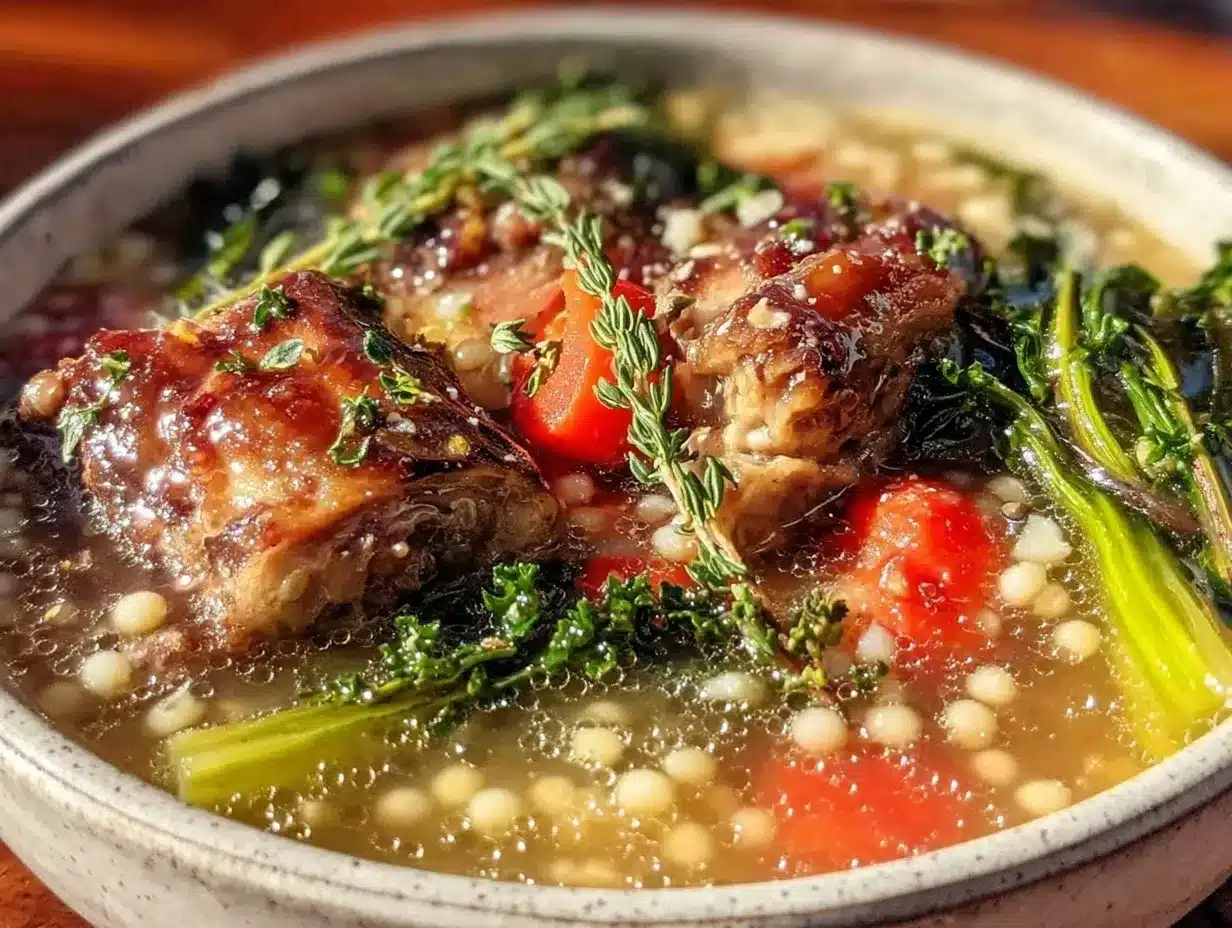
- Roast the Bones (Optional but Recommended): Preheat your oven to 400°F (200°C). Place the bones on a roasting pan and roast for 30-40 minutes until browned. This adds a rich, caramelized flavor to your broth. (Time: 40 minutes)
- Start the Broth: Transfer the roasted bones to your stockpot or slow cooker. Add apple cider vinegar and filtered water. Let it sit for 20 minutes before heating—this helps draw out minerals from the bones. (Time: 20 minutes)
- Add Aromatics: Toss in the onion, carrots, celery, garlic, bay leaf, and peppercorns. Bring everything to a gentle simmer over medium heat. Avoid boiling to keep the broth clear and flavorful. (Time: 10 minutes to simmer)
- Simmer Low and Slow: Reduce heat to low. Let the broth simmer uncovered for at least 8 hours, preferably 12-24 hours if you can spare the time. (Pro tip: If simmering on the stove, keep the heat low to avoid evaporation. Check occasionally to add water if needed.)
- Strain the Broth: Once done, carefully strain the broth through a fine-mesh sieve or cheesecloth into a large bowl. Discard the solids. (Time: 10 minutes)
- Add Vegetables: Return the clear broth to the pot. Add sweet potatoes, zucchini, mushrooms, kale or spinach, and peas. Simmer gently for 15-20 minutes until veggies are tender but still vibrant. (Time: 20 minutes)
- Season and Finish: Stir in fresh parsley, thyme, and lemon juice. Add salt to taste. Give it a final taste and adjust seasoning if needed. (Time: 5 minutes)
- Serve Warm: Ladle the soup into bowls and enjoy immediately, or let it cool before storing. (Optional: garnish with extra herbs or a drizzle of olive oil.)
Note: If you experience cloudy broth, it usually means the heat was too high during simmering. Keeping it low and slow is key. Also, you might notice some fat rising to the top after chilling—skim it off if you want a lighter broth, or stir it back in for more richness.
Cooking Tips & Techniques for the Best Bone Broth Soup
One thing I learned the hard way is that patience really pays off here. Rushing the simmering process can lead to a weaker broth. Let the bones do their slow work—honestly, that’s where the magic hides.
Don’t forget the apple cider vinegar—it sounds odd, but it’s essential for pulling nutrients out of the bones. I used to skip it once, thinking it wouldn’t matter, and the broth just didn’t have the same body.
When adding vegetables, timing is everything. Overcooking greens turns them limp and dull, so toss them in towards the end for that fresh pop of color and texture.
- Common Mistake: Boiling the broth vigorously makes it cloudy and bitter. Keep the heat low and steady.
- Pro Tip: Use a ladle to skim off foam or scum while it simmers to keep your broth clear.
- Multitasking: I often prep the veggies while the broth starts simmering—saves time without rushing.
- Consistency: If your broth tastes too mild, simmer longer or add a few more bones next time.
Variations & Adaptations for Your Taste and Needs
This bone broth soup is a flexible canvas. Here are some ways I’ve made it my own or adapted it for others:
- Vegetarian Version: Skip the bones and use a mix of roasted mushrooms, kombu seaweed, and miso for a rich, umami-packed broth. Add the same veggies for a gut-friendly punch.
- Seasonal Twist: In summer, swap sweet potatoes for fresh tomatoes and add zucchini blossoms or fresh herbs like basil and oregano.
- Spicy Kick: Add a sliced chili or a dash of smoked paprika for warmth and complexity.
- Allergen-Friendly: Use turkey or pork bones if you have beef sensitivity. For a low-FODMAP option, omit onions and garlic but add ginger for flavor.
- Personal Favorite: One chilly evening, I tossed in some chopped turmeric root and a splash of coconut milk. It turned this humble soup into a golden, silky delight that I couldn’t stop sipping.
Serving & Storage Suggestions
This soup tastes best warm, just off the stove, but let me tell you, it also reheats beautifully. Serve it in rustic bowls with a sprinkle of fresh parsley on top for a simple, inviting presentation.
Pair it with crusty whole-grain bread or a light salad if you want a fuller meal. For beverages, mild herbal teas or a crisp white wine complement the gentle flavors nicely.
Store leftovers in airtight containers in the fridge for up to 4 days. If you want to keep it longer, freeze portions in freezer-safe bags or containers for up to 3 months. When reheating, warm gently on the stovetop to keep the vegetables from getting mushy.
Fun fact: The flavors actually deepen the next day, so if you can wait, the second serving might just be even better!
Nutritional Information & Benefits
This gut-healing bone broth soup is packed with nutrients that support digestion and overall health. Here’s a rough estimate per serving (based on 6 servings):
| Calories | 180-220 kcal |
|---|---|
| Protein | 15-18 g |
| Fat | 8-10 g |
| Carbohydrates | 12-15 g |
| Fiber | 3-4 g |
Bone broth is known for its collagen content, which supports joint health and gut lining repair. Vegetables add fiber, vitamins, and antioxidants. This recipe is naturally gluten-free and can be adjusted for low-carb diets by selecting vegetables accordingly. Just be mindful of potential allergens like garlic or celery if sensitive.
From a wellness perspective, sipping this soup feels like a step toward self-care—a nourishing tradition that’s both tasty and healing.
Conclusion
This bone broth soup recipe is well worth trying if you want a simple, comforting meal that supports your gut and tastes amazing. It’s flexible enough to suit your pantry and your mood, and it invites a little slowing down in the kitchen without any stress.
I love this recipe because it reminds me that good food doesn’t need to be complicated to be meaningful. Whether you’re feeling under the weather or just craving something wholesome, this soup is a reliable friend in a bowl.
Give it a shot, tweak it to your liking, and don’t be shy about sharing how you made it your own—I’d love to hear your thoughts or any creative twists you try!
Here’s to cozy nights and happy tummies!
Frequently Asked Questions About Bone Broth Soup with Vegetables
How long should I simmer bones for the best broth?
For a rich, nutrient-packed broth, simmer bones for at least 8 hours. If you can spare the time, 12-24 hours yields even deeper flavor and more collagen extraction.
Can I use store-bought broth instead of making my own bone broth?
While store-bought broth can be convenient, it usually lacks the depth and nutrients of homemade bone broth. However, you can use it as a base and add fresh vegetables and herbs to boost flavor.
Is this soup suitable for people with digestive issues?
Yes! Bone broth is known to support gut health thanks to collagen and minerals. Just adjust vegetables according to individual sensitivities.
Can I prepare this soup in a slow cooker or pressure cooker?
Absolutely. Slow cookers work perfectly for long, gentle simmering. Pressure cookers reduce cooking time dramatically while still extracting good flavor.
How do I store leftover bone broth soup?
Store leftovers in airtight containers in the fridge for up to 4 days or freeze for up to 3 months. Reheat gently to preserve vegetable texture and flavor.
Pin This Recipe!

Bone Broth Soup Recipe Easy Gut-Healing Bone Broth with Vegetables

A nourishing and gut-healing bone broth soup simmered with fresh vegetables and herbs, perfect for comfort and wellness.
- Prep Time: 20 minutes
- Cook Time: 8 to 24 hours
- Total Time: 8 hours 20 minutes to 24 hours 20 minutes
- Yield: 6 servings 1x
- Category: Soup
- Cuisine: American
Ingredients
- 3–4 lbs beef or chicken bones (grass-fed or organic recommended)
- 2 tablespoons apple cider vinegar
- 12 cups filtered water
- 1 large onion, quartered
- 2 carrots, roughly chopped
- 2 celery stalks, chopped
- 4 garlic cloves, smashed
- 1 bay leaf
- 1 teaspoon black peppercorns
- Salt to taste
- 1 cup chopped kale or spinach
- 1 cup diced zucchini
- 1 cup chopped mushrooms (button or cremini)
- 1 medium sweet potato, peeled and cubed
- 1/2 cup frozen peas (optional)
- 2 tablespoons fresh parsley, chopped
- 1 teaspoon fresh thyme leaves (or 1/2 teaspoon dried thyme)
- Juice of half a lemon
Instructions
- Preheat oven to 400°F (200°C). Roast bones on a roasting pan for 30-40 minutes until browned.
- Transfer roasted bones to a large stockpot or slow cooker. Add apple cider vinegar and filtered water. Let sit for 20 minutes.
- Add onion, carrots, celery, garlic, bay leaf, and peppercorns. Bring to a gentle simmer over medium heat, avoiding boiling.
- Reduce heat to low and simmer uncovered for at least 8 hours, preferably 12-24 hours. Add water if needed.
- Strain broth through a fine-mesh sieve or cheesecloth into a large bowl, discarding solids.
- Return clear broth to pot. Add sweet potatoes, zucchini, mushrooms, kale or spinach, and peas. Simmer gently for 15-20 minutes until vegetables are tender.
- Stir in fresh parsley, thyme, and lemon juice. Add salt to taste and adjust seasoning.
- Serve warm, optionally garnished with extra herbs or a drizzle of olive oil.
Notes
Roasting bones before simmering adds a rich, caramelized flavor. Use apple cider vinegar to help extract minerals from bones. Keep heat low to avoid cloudy broth. Skim foam during simmering for clarity. Vegetables should be added towards the end to maintain texture and color. Broth can be stored in the fridge for up to 4 days or frozen for up to 3 months.
Nutrition
- Serving Size: 1 bowl (approximatel
- Calories: 180220
- Fat: 810
- Carbohydrates: 1215
- Fiber: 34
- Protein: 1518
Keywords: bone broth, gut healing, soup recipe, bone broth soup, healthy soup, gut health, easy soup, bone broth with vegetables